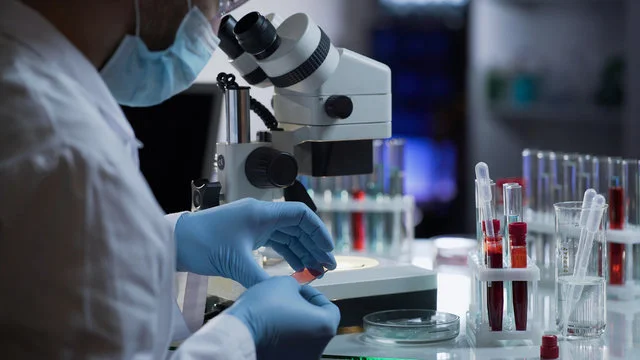
Peripheral Smear Examination By Pathologist
In a Peripheral Smear Examination, a thin layer of blood is spread on a glass slide, stained, and examined under a microscope by a trained pathologist. This test provides valuable insights into blood cell abnormalities that may not be detected by automated machines, making it essential for diagnosing conditions like anemia, infections, leukemia, and other hematological disorders.
Uses of the Test
Diagnose different types of anemia
Detect blood infections (e.g., malaria parasites)
Identify abnormal blood cells or leukemia
Evaluate platelet disorders and clotting issues
Investigate unexplained fever or abnormal CBC results
Monitor blood-related diseases and treatment response
Frequently Asked Questions (FAQs)
1. What does a peripheral smear test show?
It shows the morphology (shape and structure) of blood cells under a microscope.
2. Why is this test done along with CBC?
CBC gives numerical values, while a smear provides visual confirmation and detailed cell analysis.
3. Is fasting required for this test?
No, fasting is not required.
4. Can this test detect infections?
Yes, it can help detect infections like malaria and certain bacterial or viral conditions.
5. How long does it take to get results?
Results are usually available within same day or 24 hours.
Clinically Proven
High accuracy and reliable results from certified labs.
Advanced Tech
Using latest diagnostic machines and methodology.
Parameters Included
Test Preparation
No fasting required
Usually done along with a Complete Blood Count (CBC)